Saturday, October 8, 2016

10-2-2016 North Rim of Grand Canyon, Arizona

We traveled through Vermilion Cliffs National Monument on our way to the North Rim of Grand Canyon.


Aspen recovering from a forest fire in the Kaibab National Forest.


Yellow aspen among fir and spruce trees on the Kaibab Plateau leading to the North Rim.


Some views of the North Rim.


View from the veranda at Grand Canyon Lodge.


A small herd of buffalo on the Kaibab Plateau.


More views of Vermilion Cliffs National Monument under a cloudy sky as we traveled back to Page in the evening.


Sunset over the cliffs.


Friday, October 7, 2016

10-1-2016 Antelope Canyon, Arizona

Today we visited Antelope Canyon, located in the Navajo Nation south of Page, Arizona, which can only be visited with a Navajo guide.  Visitors are driven to the canyon's entrance in a caravan.


Antelope Canyon is a slot canyon, a deep and very narrow canyon carved by flood waters.  As the sun passes over, it creates interesting effects on the canyon's ancient sandstone walls.


Later we visited Marble Canyon, carved by the Colorado River, and spanned by two bridges:  the Navajo Bridge (on the right), a National Historic Engineering Landmark and the only bridge across the Colorado River in 600 miles at the time it was built in 1928,...


...and a more recently constructed pedestrian bridge.


TRAVEL TIP:


Thursday, October 6, 2016

9-30-2016 Mesa Verde National Park, Colorado

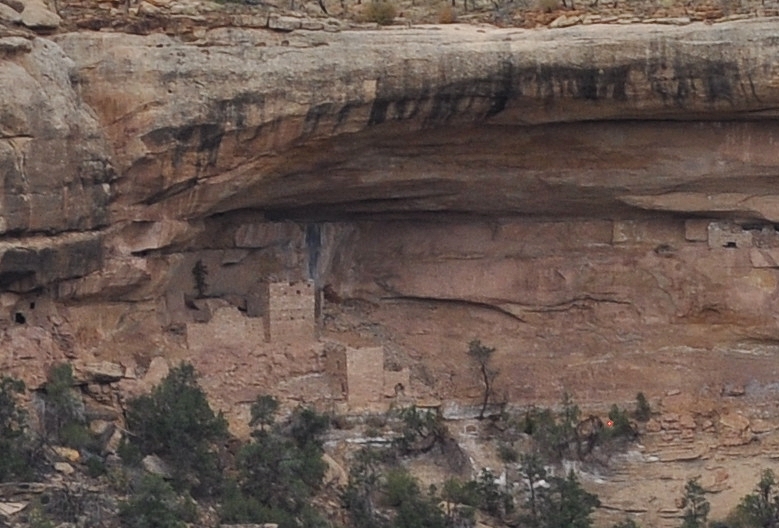
Yesterday we showed you photos of spectacular Ancestral Puebloan cliff dwellings at Mesa Verde.  Today we saw another of these dwellings.

Spruce Tree House.


These cliff dwellings, constructed in the 1200s AD, evolved from much simpler housing.  Around 550 BC the nomadic visitors to Mesa Verde settled on the mesa and practiced agriculture in addition to hunting.  They built pit houses clustered in small villages on mesa tops and cliff alcoves.


About 750 AD some began to build houses above ground, one against another, in long curving rows that archaeologists call pueblos.  Pit houses evolved into circular kivas and were used for ceremonial purposes.


One of the last puebloan structures built on the mesa, which archaeologists call the Sun Temple, was never finished and its use is unknown.  It has no door and only two windows.


The view down the valley from the front of the Sun Temple.


After tourists leave the Sun Temple at the end of the day, local fauna come out of hiding.


As we left Mesa Verde under a cloudy sky, we drove through an area recovering from forest fire.


Wednesday, October 5, 2016

9-29-2016 Mesa Verde National Park, Colorado

The first Ancestral Pueblo people settled in Mesa Verde about AD 550.  By 1150 thousands of people lived on the mesa.  Around 1200 the population began to move back into the cliff alcoves that had sheltered their ancestors centuries before.

Spruce Tree House, the best preserved cliff dwelling here.


The view of the inhabitants into the valley below them.  They accessed their dwellings from the mesa top where they farmed and hunted.


Hemenway House has not been restored.


Ancestral Puebloans hunted abundant game with traps and the atlatl, a hand-held slotted wooden rod used to propel a long spear with great force.  Atlatls were the precursor to the much more accurate bow and arrow.


Archaeologists have found interesting pottery created by the cliff dwellers at Mesa Verde, such as this double cup with a hollow lower tube so the fluid level remains constant in each cup.


Thirty-one pounds of corn, shown here, were found buried in this vessel.  Only the neck of the jar and the small cup placed on top as a cap showed above the earth.  It sat undisturbed by insects, rodents or humans for seven centuries.